Thailand works well as a remote base if three things are settled before you arrive: a visa that covers remote work for an employer or clients abroad, a tax position you understand, and a home with a reliable fibre line. For most people the visa is the Destination Thailand Visa. High earners with a qualifying employer can use the Long-Term Resident visa. Figures are for November 2026.
The visa options compared
Remote work is not a reason to enter Thailand in itself, so the visa decides what you may do. These are the routes a remote worker usually weighs.
| Destination Thailand Visa | LTR, Work-from-Thailand Professional | Thailand Privilege | Retirement extension | |
|---|---|---|---|---|
| Stay | 180 days per entry, extendable once by 180, for 5 years | 10 years, in two five-year blocks | 5 to 20 years by tier | One year at a time |
| Built for remote work | Yes, the workcation category | Yes, for an overseas employer | No | No |
| Main test | THB 500,000 in funds plus employment or freelance evidence | USD 80,000 a year over two years and a qualifying employer | The membership fee | Age 50 and THB 800,000 or THB 65,000 a month |
| Cost | GBP 300 in London | THB 50,000 per person | THB 650,000 to THB 5 million | Annual extension fee |
| Work permit | No | No | Only through the USD 1 million Flexible Plus programme | No |
The DTV. It covers three groups: the workcation category for digital nomads, remote workers, foreign talent and freelancers; people on Thai soft power activities such as Muay Thai or cookery courses; and the spouse and children under 20 of a holder. The visa is valid for five years with multiple entries. Each entry gives 180 days, and the Immigration Bureau can extend each stay once by up to 180 days. After that you must leave and re-enter on the same visa.
The LTR Work-from-Thailand Professional. The Board of Investment (BOI), which issues the LTR, asks for average personal income of at least USD 80,000 a year over the past two years, or USD 40,000 to USD 80,000 with a master's degree or higher. Your employer must be listed on a stock exchange, or a private company with at least three years of operation and USD 50 million of combined revenue over three years, or a wholly owned subsidiary of either. The revenue test fell from USD 150 million on 4 February 2025. You also need USD 50,000 of health insurance, Thai social security cover or a USD 100,000 deposit held for 12 months. The fee is THB 50,000 per person.
This category carries no work permit, and holders may not work with Thai employers. In return you report your address once a year instead of every 90 days and need no re-entry permit.
Thailand Privilege and retirement. Neither is a remote work visa. Thailand Privilege members can work only through its Flexible Plus programme, which requires a minimum investment of USD 1 million. The retirement visa prohibits work. If you plan to keep working, start with the DTV or LTR, and run your circumstances through the visa pathfinder.
Applying for the DTV, step by step
- Get your embassy's checklist. Fees and documents vary between Thai embassies. The steps below are for an application in London.
- Prove your funds. At least THB 500,000, which the London embassy sets at GBP 12,000, shown in bank statements. It is evidence, not a payment, and stays in your account.
- Prove your work. An employment contract or employer's certificate, or a professional portfolio if you freelance.
- Prove where you live. In London you need permanent residence in the UK, Ireland or a British Overseas Territory, and a police clearance certificate issued within six months.
- Arrive and plan the year. Diary the 180-day point of each entry. If you extend, apply to Immigration before the stay ends. After the extension you must leave.
What goes wrong. Applying from a country where you cannot prove permanent residence. Letting the stay run past its end date. Taking local clients, which turns remote work into work in Thailand. Treating the DTV as residence: each entry is still subject to inspection at the border.
Tax: the 180-day line
A person in Thailand for a total of 180 days or more in a tax year is a Thai tax resident. One full DTV stay inside a calendar year is enough.
Residence matters because of how Thailand now taxes foreign income. Under Revenue Department Instruction Paw. 161/2566, issued on 15 September 2023, foreign-source income that a resident brings into Thailand from 1 January 2024 is taxable when it arrives, whatever year it was earned. A follow-up instruction, Paw. 162/2566 of 20 November 2023, excludes income earned before 1 January 2024. Treat "bringing in" broadly: wire transfers, e-banking and carrying cash all count.
The UK and many other countries have a double taxation agreement with Thailand. Thai domestic law, though, is silent on a foreign tax credit for individuals, and the procedure for claiming treaty relief is still unclear. The LTR carries an exemption on overseas income; ask a tax adviser how it applies to your category.
Practical steps:
- Keep a day count from your passport stamps. See tax residency.
- Keep income earned before 2024 in a separate account, so you can show what it is.
- Take advice in Thailand and at home before your first long stay, not after it.
Internet and connectivity
Thailand's fixed broadband is fast by international standards: in March 2025 it ranked 13th in the world for fixed broadband speed.
From mid-2025 to mid-2026, the main remote work centres measured as follows:
- Bangkok. Median fixed download 317.02 Mbps, median mobile download 167.27 Mbps, 5G available 80.5% of the time.
- Chiang Mai. Median fixed download 258.50 Mbps, 5G available 76.3% of the time.
- Phuket. Median mobile download 167.62 Mbps, 5G available 83.8% of the time.
A home connection is inexpensive. Unlimited broadband of 60 Mbps or more costs about THB 609 a month in Bangkok, THB 599 in Phuket, THB 640 in Pattaya, THB 657 in Chiang Mai and THB 757 in Hua Hin (November 2026).
These are city medians, not a promise for a given address. Before you sign a lease or a reservation:
- Ask which fibre providers already serve the building or the estate, and whether the line runs into the unit.
- Run a speed test on the building's connection and on your phone at the times you will work.
- Keep a mobile data plan as a backup and test it inside the home, especially on hillside and island sites.
- For a villa, ask how long a new fibre connection takes to install.
Time zones and working hours
Thailand is on UTC+7 all year and has never used daylight saving. That puts it seven hours ahead of London in winter and six in summer, one hour behind Singapore, and eleven or twelve hours ahead of New York depending on the season.
For a European employer, the Thai afternoon and evening overlap with the European morning. For US clients, calls tend to fall early in the Thai morning or late at night. Settle the hours you will keep before you choose where to live, because a late-night call schedule suits a quiet building better than a beach road.
Coworking and the home office
Coworking spaces are found in all the main centres, and the cafés and coworking spaces along the sois off Nimmanhaemin Road in Chiang Mai's Nimman are the best known. Prices and memberships change often, so take a day pass before you commit to a month.
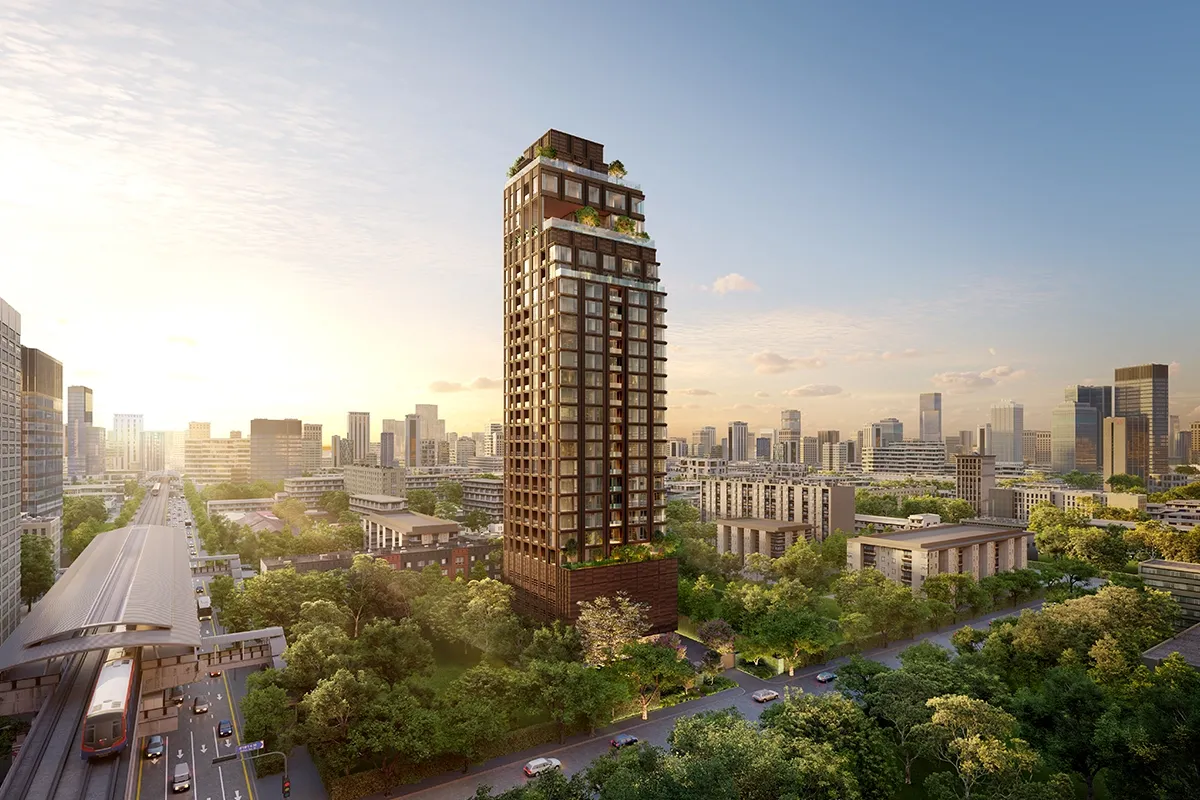
Several new condominiums include shared work space. In Chiang Mai, THE BASE Height, a finished tower 750 m from Central Chiangmai, has a co-working lounge with a meeting pod. In Bangkok, the clubhouse at valles HAUS in On Nut holds a co-working space and a meeting room. A shared lounge helps, but for daily calls a second bedroom used as an office is worth more.
Where to base yourself
| Base | Why remote workers choose it | What to weigh |
|---|---|---|
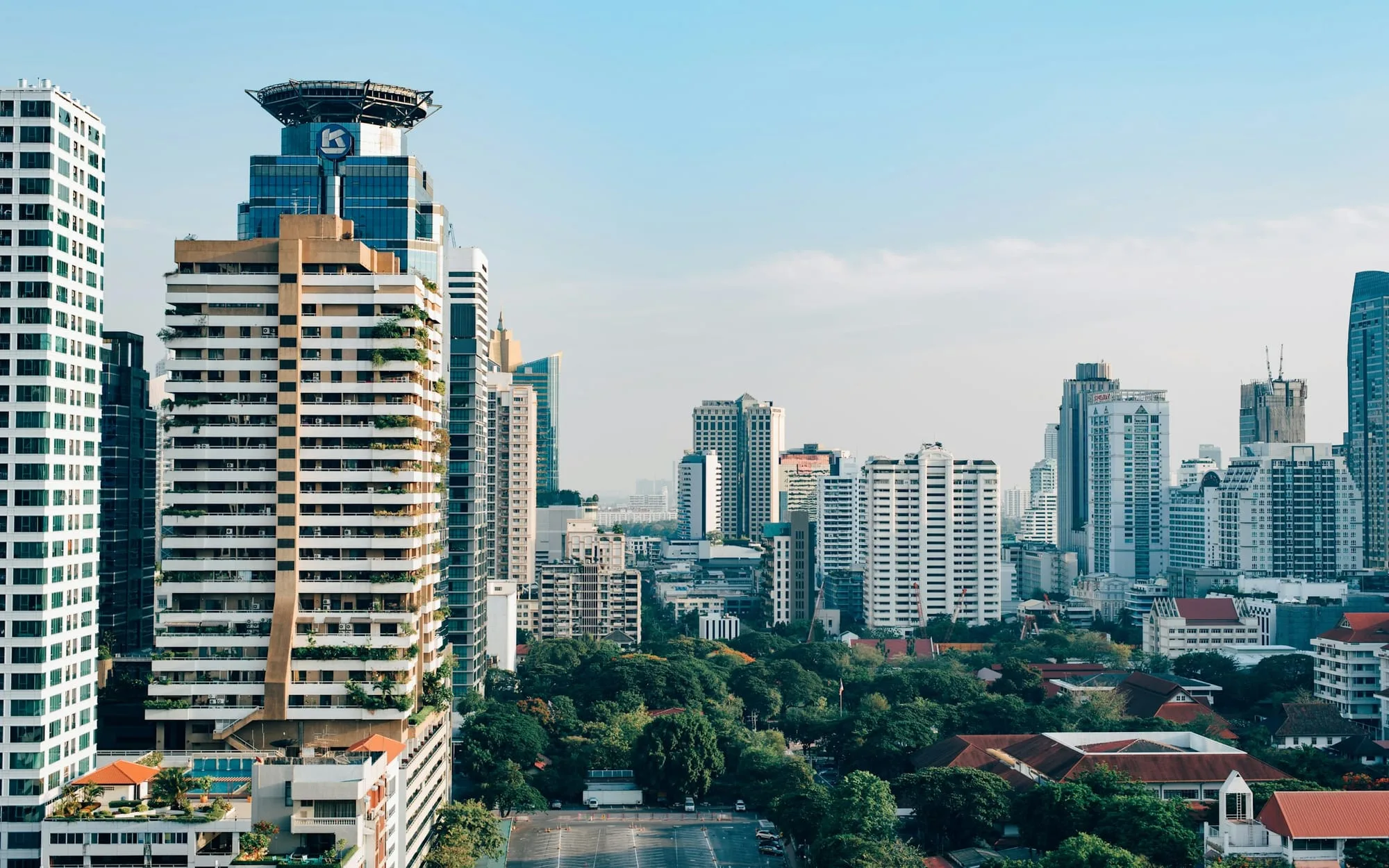
| Bangkok: Sukhumvit, Ari, On Nut, Rama 9 | Fastest fixed broadband of the main centres, two airports, life without a car on the BTS and MRT | Higher rents in the centre, and air pollution at times |
| Chiang Mai: Nimman | Long-stay community, walkable, lower living costs: about THB 18,290 a month for a single person before rent | Smoke in the late dry season: the air quality index passed 150 on 16 April 2026 |
| Phuket: Rawai and Nai Harn, Kathu, Phuket Town | The highest 5G availability and mobile speed of the three cities, beaches and an international airport | The south-west monsoon (see climate and seasons), and driving distances |
| Pattaya and Hua Hin | Within reach of Bangkok, sea views and established long-stay communities | Smaller remote work scene, so check the connection at the address |
| Koh Samui | Island life with a different rainy season from Phuket | Test the connection at the address, and check flights |
Single-person costs excluding rent run from about THB 18,290 a month in Chiang Mai to THB 23,690 in Bangkok. See cost of living for a fuller budget, and climate and seasons to plan which months to spend where. If you are unsure, the area matchmaker ranks areas against your own priorities.
Your age
Time in Thailand each year
Will you work?
Assets or investment available
What matters most
Closest match
Thailand Privilege: membership tiers, prices and what you get
80
Fit out of 100
Why this route
You are 50 or over, plan up to six months a year in Thailand and do not intend to work, so this route is the closest fit: it asks for the least paperwork of the five, and it lets you come and go for long stays without reapplying.
- Stay
- 5 to 20 years depending on tier, with up to one year per entry
- Cost
- THB 650,000 to THB 5,000,000 as a one-off membership fee
The other routes, ranked
Your assets can cover the investment it requires.
You meet its age test of 50 or over, but it means a renewal with proof of funds every year, and 90 day reporting.
From 50 its wealthy pensioner category is open if your pension or other passive income passes the BOI test, but qualifying takes a substantial file of documents, reviewed by the BOI.
Each entry allows a stay of up to 180 days, which matches your time in Thailand, but without remote work you would need a qualifying activity, such as a course or medical treatment.
Buying property does not by itself give a right to stay.
General guidance, not immigration advice. The fit scores are our own reading of each route's published rules against five answers, and they leave out income, nationality and health insurance tests. Rules, fees and thresholds change: check the official source linked from each guide, or ask us.
Send me the ranking
Your five answers and the routes ranked against them, by email. An adviser will talk you through the application and the homes that fit your plans.
Email me the ranking
Renting first, then buying
Many remote workers rent for a season, then buy once they know the area and the building. Two rules shape that decision:
- A purchase gives no right to stay. Buying property does not qualify you for the DTV, and only the LTR counts a property toward its investment test, in categories other than Work-from-Thailand Professional.
- Ownership is limited. Foreigners can own a condominium freehold within the foreign quota. A house or villa is held on a lease. Read can foreigners buy property in Thailand and freehold vs leasehold.
If you spend half the year away, you may want to let the home while you are gone. Lets of under 30 days need a hotel licence, so read short-term rental rules before you count on income.
Next steps
For a working base close to transport and fast lines, start with property for sale in Bangkok and Chiang Mai. For a beach base with long-stay tenants nearby, look at Phuket. Open the property map to see homes against stations, beaches and hospitals, and ask the building for its internet providers before you reserve.