A holiday home in Thailand is two decisions at once: where and when you want to be there, and what the home does while you are not. Get the first right and the second follows. A home on the right coast for your months, held in a way that lets it earn or rest as you choose, is a pleasure. One bought on a rental projection for nights you then want for yourself causes friction.
Choose the coast for your months
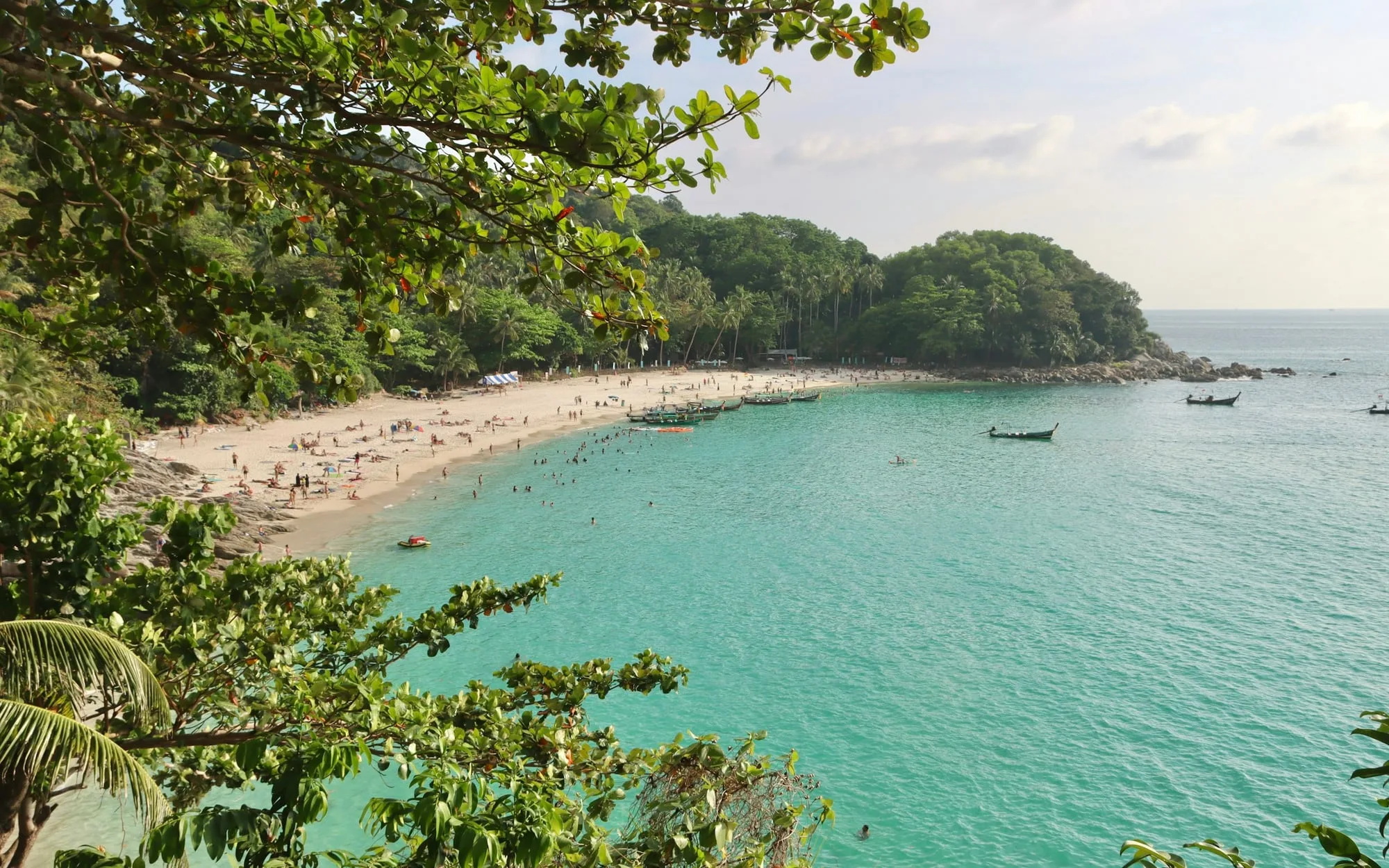
Thailand's two coasts have opposite seasons. The Andaman coast, which includes Phuket and Krabi, is at its best from November to April. The Gulf islands, led by Koh Samui, are driest from January to September and take their heaviest rain from October to December. Hua Hin and Pattaya are within driving distance of Bangkok, which suits owners who fly into the capital. See the coast and season explorer and climate and seasons.
Demand follows the same calendar. In the first half of 2026, January and February brought 43.4% of Phuket's air arrivals for the half year, and June only 10.8%. An index of hotel revenue per room, where 100 is the average, stood at 196 in January and 41 in June. For a holiday-home owner that has two consequences: the months you most want are the months the home would earn most, and the months it is free may earn little.
Three ways to use the home while you are away
| Model | What happens while you are away | What it suits |
|---|---|---|
| Leave it empty | A contact or manager checks it; it is ready when you arrive | Owners who want flexibility and several stays a year |
| Let by the month | Tenants on lets of 30 days or more, arranged by an agent | A long block of free months, such as May to October on Phuket |
| Hotel rental programme | The operator lets the unit nightly and pays you a share | Owners who want little involvement and accept limits on their own nights |
Monthly lets are lawful for an ordinary condominium or villa. Nightly lets are not: lets of under 30 days need a hotel licence, and condominium units cannot be used for hotel operations. See short-term rental rules.
Hotel programmes are open to units in a hotel-licensed scheme, usually a branded residence or hotel residence. Every programme limits the nights an owner may use, because each owner night is a night the hotel cannot sell. In a rental pool, owner use is often limited to between a few and a dozen days a year. Read the clause for the number of nights, whether peak dates are excluded, the notice you must give and any charge when you stay. See hotel-managed and rental pool schemes.
A buyer who wants December to February every year is asking for the nights a hotel values most. Phuket's hotels averaged THB 7,117 a night in the first half of 2026, with occupancy of 76.8%. A home outside a programme, let by the month for the rest of the year, often fits that plan better.
What a holiday home costs to keep
The costs run all year, whether you are there or not: the common-area fee, land and building tax, insurance, utilities that run while you are away, and the care a closed home in the tropics needs. Set them out in the running cost calculator before you buy, and read running costs of a Thai property.
Letting changes the sums, and sometimes the tax. Rent paid to a non-resident owner is subject to 15% withholding. A home let by the month stays in the residential category for land and building tax; one let by the night for payment falls outside it. See rental income and tax.
Work out what letting covers
Your months in the home
3 months in a row is longer than a visa-exempt stay, which is 30 days for tourism from 15 September 2026. Owning a home gives no right to stay. See the visa pathfinder.
The cost of keeping it
The months you are away
Each night of your own stay costs
฿149
The year's net cost spread over your 90 nights.
Rent covers
91%
Of the running costs, after fees and tax.
Net cost a year
฿13,400
Running costs less net rent.
- RentTHB 35,000 a month, 60% of 9 free months
- ฿189,000
- Agent fee15% of rent
- −฿28,350
- Tax15% of the rent you receive
- −฿24,098
- Running costs
- −฿150,000
- Your net cost a year
- −฿13,448
In short
You stay 90 nights, the rent covers 91% of the running costs, and each of your nights costs THB 149.
An estimate from your own figures, not a forecast of rent. It leaves out the money tied up in the purchase. Lets of under 30 days need a hotel licence, so an ordinary condominium can be let by the month but not by the night. See short-term rental rules and buying a holiday home.
Sources for these figures
Talk it through
We can point you to buildings that suit your months: those with a licensed rental programme, and those where monthly tenants are easy to find.
Send me this plan
Your months, rent and costs by email, with an adviser's view of the homes that fit how you will use one.
Email me the plan
Tap the months you will spend in the home, choose how it is used while you are away, and the planner sets the rent against the running costs. The headline is what each night of your own stay costs once the rent is counted: a fairer measure of a holiday home than a yield.
How long you can stay
Owning a home in Thailand gives no right to be there. From 15 September 2026 the visa-exempt scheme for tourists is 30 days, replacing the 60-day scheme. An owner who wants to spend a season in the home needs a visa that allows it.
- The Destination Thailand Visa gives stays of up to 180 days on a five-year visa.
- Thailand Privilege is a paid membership with long-stay entry for 5 to 20 years.
- The retirement visa is open from age 50.
- The Long-Term Resident visa suits wealthy owners, pensioners and remote workers who meet its thresholds.
The visa pathfinder compares them against your plans.
Condominium or villa
A condominium is the simpler holiday home. A foreigner can own it freehold within the building's foreign quota, the building is managed and secured, and it can be locked and left. A villa gives privacy, a garden and a pool of your own, but a foreigner holds the land on a registered lease of up to 30 years and must arrange the upkeep that a building would otherwise provide. See freehold vs leasehold and buying a villa in Thailand.
On Phuket, Bang Tao took 32.7% of condominium sales in 2025, followed by Karon and Kamala. The most villa sales were in Cherng Talay, which takes in Bang Tao and Layan, followed by Pa Khlok and Bang Jo. Browse property for sale in Phuket or compare Phuket and Koh Samui.
Before you reserve
- Which months will you use the home, and which coast is in season then?
- Will it be empty, let by the month or in a programme while you are away?
- If a programme, how many owner nights does the contract give, and in which months?
- What does the home cost to keep for a year, before any rent?
- Which visa covers the length of stay you have in mind?