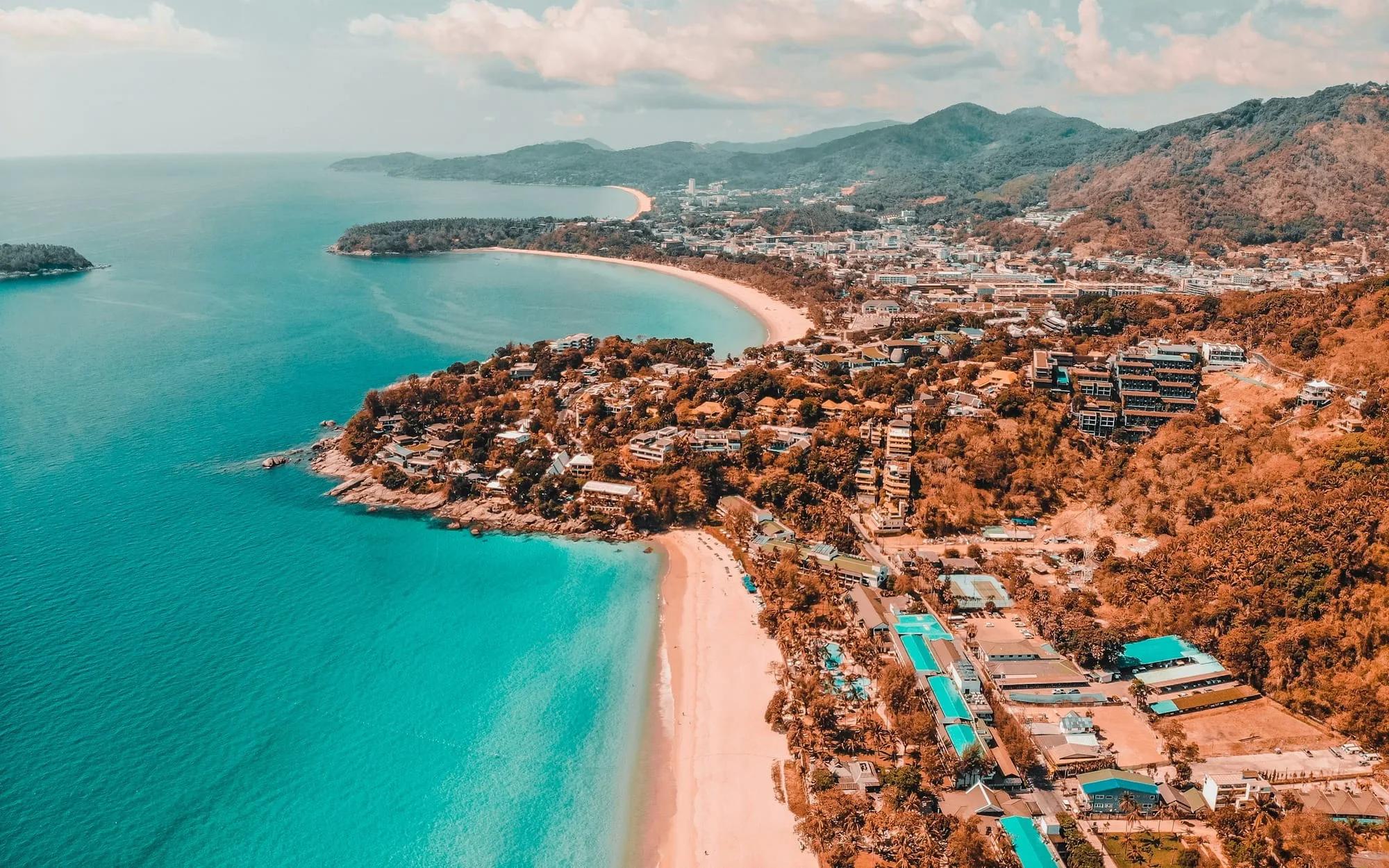
Phuket's beaches are all on one side of the island. The west coast, facing the Andaman Sea, has the sand, the resorts and the sunsets. The east coast, facing Phang Nga Bay, is mostly mudflat and mangrove, and it is where the piers and marinas are. So the real choice for a buyer is which stretch of the west coast, and that depends less on the sand, which is good almost everywhere, than on what sits behind it: a national park, a resort estate, a village or a nightlife street.
How the coast works through the year
Phuket has a tropical monsoon climate. The dry season runs from December to March, and the island averages about 2,200 mm of rain a year. From May to October the south-west monsoon drives swell straight onto the west coast. May to October is the rip current season, and Phuket records 30 to 40 drownings a year, mostly in those months.
That shapes everything about a west-coast home. In the dry season the sea is flat enough for children, paddleboards and long swims. In the monsoon the same beaches can be closed to swimming for days at a time, though they stay pleasant for walking, surfing where it is allowed, and eating by the water. Our climate and seasons guide has the monthly rainfall, and the seasons tool shows what each month is like across Thailand.
The north: Mai Khao, Nai Yang and Nai Thon
The three northern beaches lie within Sirinat National Park, created in July 1981 as Thailand's 32nd national park. It covers about 90 square kilometres, 68 of them sea, and sits about 30 km north of Phuket Town beside the airport. Because the beachfront is park land, there is no strip of bars along the sand.
Mai Khao is Phuket's longest beach: a long, open shore backed by trees and a line of large resort hotels, known for watching aircraft land. Sea turtles nest on Mai Khao and Nai Yang between November and February. Leatherbacks once nested in the park too, with 166 eggs recorded from 1999 to 2013, but none has been seen since 2013. It is a walking beach more than a swimming one, and it is rough in the monsoon. See Mai Khao.
Nai Yang has a village behind the beach with small hotels and places to eat, and coral reefs lie 700 to 1,000 metres offshore in the park's marine section. It is the closest beach to arrivals, which suits owners who fly in often. Nai Thon, a short drive south, is a single cove with a few resorts and is one of the least visited beaches on the island. Both are covered in the Nai Yang guide.
Who it suits: frequent flyers and buyers who want quiet more than restaurants. What to weigh: aircraft noise near the western end of the runway, a drive for schools and hospitals, and careful title checks on land near the park boundary.
Layan and Bang Tao
Bang Tao is a long, sandy bay with the Laguna Phuket resort estate at its centre: hotels, lagoons and the 18-hole, par-71 Laguna Golf Phuket inside one managed compound. Behind it, the Cherngtalay road holds restaurants, cafes and the Boat Avenue and Porto de Phuket shopping streets. It is the most complete beach district on the island for daily life, and the usual choice for families, partly because UWC Thailand is a short drive inland. See Bang Tao.
Layan is the undeveloped northern end of the same bay, backed by trees and a few resorts, with villas on the hills behind. You get the Bang Tao address with less around you, and you drive for everything. See Layan.
Who it suits: families, golfers, and owners who want a managed home they can lock and leave. What to weigh: the highest prices on the island and the heaviest new supply, which makes building choice matter.
Surin and Pansea
Surin is a short, steep beach with a village behind it and villas on the hills above. The beach clubs that once lined the sand were removed by the authorities, and the beachfront is now public. The headland to the north shelters Pansea, home to long-established resorts. Surin is quiet in the evening and close to Bang Tao's shops. Steep beaches mean a sudden drop-off and strong shore break when the swell is up, so it rewards caution in the monsoon. See Surin.
Kamala
Kamala is a curved bay with a working village on the flat land behind the beach: small restaurants, a market and a mosque. The northern end has the larger resorts and a beach club, and the rocky coast south towards Patong carries large private villas. It suits buyers who want a sea view and a calmer base with Patong over the hill. Schools and the private hospitals are a long drive. See Kamala.
Patong and Kalim
Patong has a 2,850-metre beach running the full length of the town, and it is Phuket's main resort and nightlife centre. Almost everything is within walking distance, which is rare on the island. The cost is noise, crowds and traffic in the high season. Patong is also the Phuket beach on Thailand's smoking ban list: since 2017, smoking on the sand has carried a fine of up to THB 100,000 or a year in prison. Kalim, at the northern end of the bay, is calmer, and the hillsides above are where the sea views are. See Patong.
Who it suits: investors letting to visitors in every month of the year. It rarely suits anyone who wants a quiet home.
Karon, Kata and Kata Noi
Karon is a long, open beach with strong waves and a road and hotels behind it. It is also where the monsoon is most often deadly: in June 2025 three visitors drowned at Karon, all of whom entered the water under red flags. Kata, to the south, is a smaller bay with a compact, walkable centre, and it draws surfers when the monsoon swell arrives. Kata hosts the Phuket King's Cup Regatta, first held in 1987, whose 37th edition ran from 29 November to 6 December 2025. Kata Noi, beyond the headland, is a short, quieter cove. See Kata and Karon.
Who it suits: buyers of a lower-priced holiday-let condominium and families who like a walkable resort. What to weigh: heavy condominium supply, a long airport run and a shorter swimming season.
Nai Harn, Ya Nui and Rawai
Nai Harn is a sheltered sandy bay with a lake and a temple behind it, a fine swimming beach in the dry season and a dangerous one in monsoon surf. Ya Nui is a small beach beside Promthep Cape. Rawai, on the south-east side, is a long seafront lined with seafood restaurants, where longtail boats leave for the nearby islands; it is a boat beach more than a swimming one. See Rawai and Nai Harn.
Who it suits: long-stay and full-time residents who want a settled community and lower villa prices. What to weigh: about an hour's drive to the airport.
The east coast: Chalong, Cape Panwa and Cape Yamu
The east coast faces Phang Nga Bay and is mostly muddy shore. Chalong is a working bay built around its pier, where day boats leave for Coral Island and Racha; it is not for swimming. Cape Panwa has small beaches at Ao Yon and Panwa and a quiet, hilly headland 20 minutes from Phuket Town. Cape Yamu and the Ao Po coast are where the big marinas are: Ao Po Grand Marina has 230 berths and no tide restriction. These are coasts for boat owners and full-time residents, not for beach days. Our guide to sailing and marinas on Phuket covers them in detail, and the area guides for Chalong, Cape Panwa and Cape Yamu cover the homes.
The beaches compared
| Beach | What it is like | Monsoon, May to October | Suits | Area guide |
|---|---|---|---|---|
| Mai Khao | Long, empty, national park | Rough, walking only | Space and quiet | Mai Khao |
| Nai Yang | Park beach with a village, near the airport | Exposed | Frequent flyers | Nai Yang |
| Layan | Quiet north end of Bang Tao bay | Exposed | Villa buyers who want privacy | Layan |
| Bang Tao | Long bay around Laguna, golf and restaurants | Exposed, red flags common | Families and golfers | Bang Tao |
| Surin | Short, steep, public beachfront | Strong shore break | A settled neighbourhood | Surin |
| Kamala | Village bay with headland villas | Exposed | Sea views, calmer base | Kamala |
| Patong | 2,850 m resort beach, nightlife | Red flags common | Holiday-let investors | Patong |
| Karon | Long, open, hotels behind | Most dangerous in recent seasons | Lower-priced holiday lets | Kata and Karon |
| Kata | Smaller bay, walkable, surf | Surf season | Families, surfers | Kata and Karon |
| Nai Harn | Sheltered bay with a lake | Dangerous surf | Long-stay residents | Rawai and Nai Harn |
| Rawai | Seafood and longtail boats | Calmer, not a swimming beach | Full-time residents | Rawai and Nai Harn |
| East coast | Mudflat, piers and marinas | Sheltered water | Boat owners | Cape Yamu |
Safety and rules on the sand
- Red flags mean no swimming. Lifeguards patrol from sunrise to sunset, check the sea each morning and set the flags. Multilingual warning signs are posted along the beach.
- Rip currents are the main danger. They are most frequent from May to October, when monsoon winds drive the swell onshore. If caught, swim parallel to the shore rather than against the current.
- Swim where lifeguards are on duty, and not after dark or after drinking. All three people who drowned at Karon in June 2025 had entered the water under red flags.
- Do not smoke on Patong Beach. The ban carries a fine of up to THB 100,000 or a year in prison.
- Leave turtle nests alone on Mai Khao and Nai Yang between November and February.
Matching a beach to a buyer
- You fly in often and want quiet. Nai Yang, or Layan at the quiet north end of Bang Tao bay. Layan Verde is about 2 minutes by car from Layan Beach and 20 from the airport.
- You are moving with children. Bang Tao, for Laguna and the school run. The Standard Residences, Phuket Bang Tao runs a shuttle to the beach, and PEYLAA Phuket sits behind Laguna Golf. CANVAS Cherngtalay is finished, has a children's garden with a water slide, and is 70 metres from Boat Avenue's park.
- You want a sea view and a village feel. Kamala. MGallery Residences MontAzure is about 300 metres from Kamala Beach, a 4-minute walk.
- You plan to live here most of the year. Rawai and Nai Harn, for a settled community and lower villa prices. See the Rawai and Nai Harn guide.
- You want a home base, not a beach address. Chalong, between the southern beaches and Phuket Town. La Vista Villas, on a hill in Chalong, is about 10 minutes by car from Kata and Rawai beaches.
If the beach matters most, visit in both seasons before you buy. A bay that is glassy in February can be closed to swimmers for much of August, and the letting season follows the sea.
Your next step
Start with the homes for sale in Phuket, or go straight to the districts with homes on the market: Bang Tao, Layan, Surin, Kamala and Chalong. The property map shows every development against the beaches, schools and hospitals, and the area matchmaker ranks districts by what you care about. For the wider island, read the Phuket guide.