Thailand has a long-established route for retirees, and the bar is modest: age 50, and either THB 800,000 in a Thai bank or THB 65,000 a month coming in. What makes a retirement here work is everything around the visa: health insurance you can keep as you age, a home close to a good hospital, a plan for pensions and tax, and a will that Thai authorities will act on. Figures are for November 2026.
The retirement routes compared
| Non-Immigrant O | Non-Immigrant O-A | Non-Immigrant O-X | LTR Wealthy Pensioner | Thailand Privilege | |
|---|---|---|---|---|---|
| Age | 50 or over | 50 or over | 50 or over | 50 or over | Any |
| First permission | 90 days, then yearly extensions in Thailand | One year, multiple entry | Five years, multiple entry | 10 years, in two blocks of five | 5 to 20 years by tier |
| Money test | THB 800,000 balance or THB 65,000 a month | The same | THB 3 million in a Thai bank, or THB 1.8 million plus THB 1.2 million a year of income | USD 80,000 a year of passive income, or USD 40,000 plus USD 250,000 invested | The fee: THB 650,000 to THB 5 million |
| Health cover | Not required for the visa | THB 3 million or USD 100,000 | Thai policy: THB 40,000 outpatient, THB 400,000 inpatient | USD 50,000, Thai social security or a USD 100,000 deposit | Check with Thailand Privilege |
| Address report | Every 90 days | Every 90 days | Every 90 days | Once a year | Every 90 days |
For the O-X, the deposit must be held in a Thai bank in Thailand, and accounts abroad are not accepted. Our retirement visa guide sets out how long the deposit must stay in the account and which nationalities can apply for the O-X.
Which route fits. The Non-Immigrant O with yearly extensions is the cheapest if you are happy to keep THB 800,000 in a Thai bank and repeat the paperwork each year. The O-A suits someone who wants a year's permission before arriving and can buy the insurance. The LTR visa suits a retiree with USD 80,000 a year of pension, rent, dividend or interest income, and replaces the 90-day report with a yearly one. Earned income and salary do not count. Thailand Privilege is for those under 50, or anyone who would rather pay a fee than prove income. Compare them in the visa pathfinder.
Applying for the O-A: the checklist
The conditions in November 2026:
- Aged 50 or over on the day you apply.
- A bank deposit of at least THB 800,000 for the last three months, or THB 65,000 a month of income, or a combination totalling THB 800,000 a year.
- Health insurance for the entire stay with a sum insured of at least THB 3 million or USD 100,000 per policy year. A foreign insurer must complete the Foreign Insurance Certificate.
- A police certificate, and no criminal record in Thailand or your home country.
- A medical certificate on the prescribed form, no more than three months old.
Employment of any kind is prohibited.
The yearly routine
Retiring on a Non-Immigrant O or O-A means a yearly cycle of paperwork. Keep a calendar:
- Every 90 days: confirm your address to the Immigration Bureau. See 90-day reporting.
- Before each trip abroad: get a re-entry permit, or the extension ends when you leave. See our retirement visa guide. LTR holders need no re-entry permit.
- Before the permission ends: apply to your local immigration office for the next one-year extension, with fresh bank or income evidence.
- Through the year: keep the deposit at the level your extension requires.
- At insurance renewal: for an O-A, a policy that lapses can cut short your permission.
Healthcare and insurance
Thailand has no reciprocal healthcare agreement with the UK. Private hospitals are of a high standard but can be expensive, and all hospitals require a guarantee of payment before they treat you. Residents of other countries should assume the same.
Three points for retirees:
- Buy cover you can keep. A visa may require a minimum sum insured, but the real question is whether the policy will renew as you age and what it excludes. Get quotations, including the renewal terms, before you set your budget.
- Live near the hospital you will use. Specialist depth is greatest in Bangkok. Our healthcare guide lists the main private hospital in each region and explains accreditation and direct billing.
- Know the numbers. Dial 1669 for the medical emergency service, or 191 and ask for an ambulance. Save your private hospital's own emergency line as well.
Hospitals and pharmacies usually accept UK prescriptions, and brand-name medicines can cost more than local equivalents.
What retirement costs
A single person's monthly costs before rent, and the rent of a one-bedroom flat in the centre, in November 2026:
| Centre | Single person, excluding rent | One-bedroom flat, city centre |
|---|---|---|
| Chiang Mai | THB 18,290 | THB 16,550 |
| Pattaya | THB 19,623 | THB 19,938 |
| Hua Hin | THB 21,326 | THB 19,520 |
| Phuket | THB 23,295 | THB 24,000 |
| Bangkok | THB 23,690 | THB 24,283 |
These are averages for a local-style budget. They leave out health insurance, a car, flights home and the imported food and wine that many retirees buy. An owner pays no rent but pays the condominium's common area fee and, on a home that is not the main residence, land and building tax. Our cost of living guide builds a fuller budget for a couple.
Pensions, banking and tax
The UK State Pension. It rises each year only for pensioners living in the UK, the EEA, Gibraltar, Switzerland or a country with a social security agreement that provides for them, excluding Canada and New Zealand. Thailand is not on that list, so British pensioners in Thailand have their pensions held at the rate first paid. If you return to the UK, the pension rises to the current rate. You can claim from abroad through the International Pension Centre once you are within four months of State Pension age.
Thai tax. Spending 180 days or more in Thailand in a tax year makes you a Thai tax resident. Since 1 January 2024, foreign income a resident brings into Thailand is taxable when it arrives, under Revenue Department Instruction Paw. 161/2566. Instruction Paw. 162/2566 excludes income earned before 2024, which helps retirees living on older savings. The UK has a double taxation agreement with Thailand, but how pensions are treated depends on the type of pension and the treaty. Take independent tax advice in both countries before you move pension income.
Banking. You will need a Thai account for the visa deposit and daily life. Keep the visa deposit separate from money for a purchase, which must arrive from abroad with the right paperwork. See banking and daily life and sending money to Thailand.
Wills and planning ahead
Thai authorities are not likely to recognise a UK will unless a Thai court has approved the executor, and a UK lasting power of attorney may not be recognised in Thailand. A separate Thai will for Thai assets, and a Thai power of attorney, are worth discussing with a lawyer before you need them. Read inheritance and wills, and take advice from a Thai lawyer on how your will and the title to your home fit together.
If you hold a villa on a lease, check what happens to the lease on your death and who may take it over. Freehold vs leasehold explains the difference.
Where retired owners buy
| Area | Why retirees choose it | What to weigh |
|---|---|---|
| Hua Hin: Khao Takiab, Pranburi | A calm town within a drive of Bangkok, golf and long winter stays | Complex cases go to Bangkok |
| Chiang Mai: Hang Dong, Nimman | Retirement on a moderate budget, the lowest living costs in the table, houses with gardens | Smoke in the late dry season: the air quality index passed 150 on 16 April 2026 |
| Pattaya: Pratumnak, Na Jomtien, Jomtien | City services, sea-view condominiums at moderate prices, a large long-stay community | A busy city centre, and plenty of competing resale stock |
| Phuket: Chalong, Rawai and Nai Harn, Phuket Town | Full-time island living with an international airport and the island's main hospitals | Higher costs, and the south-west monsoon |
| Koh Samui: Lipa Noi, Maenam | Quiet, sunset-facing coasts and a long-stay community | Bangkok for complex treatment |
Read climate and seasons before you choose, because the months you will spend in Thailand matter as much as the place. The area matchmaker can weigh quiet, healthcare and value for you.
Before you buy
- Rent first. A season in the area, in the hot or rainy months as well as the cool ones, tells you more than a viewing trip.
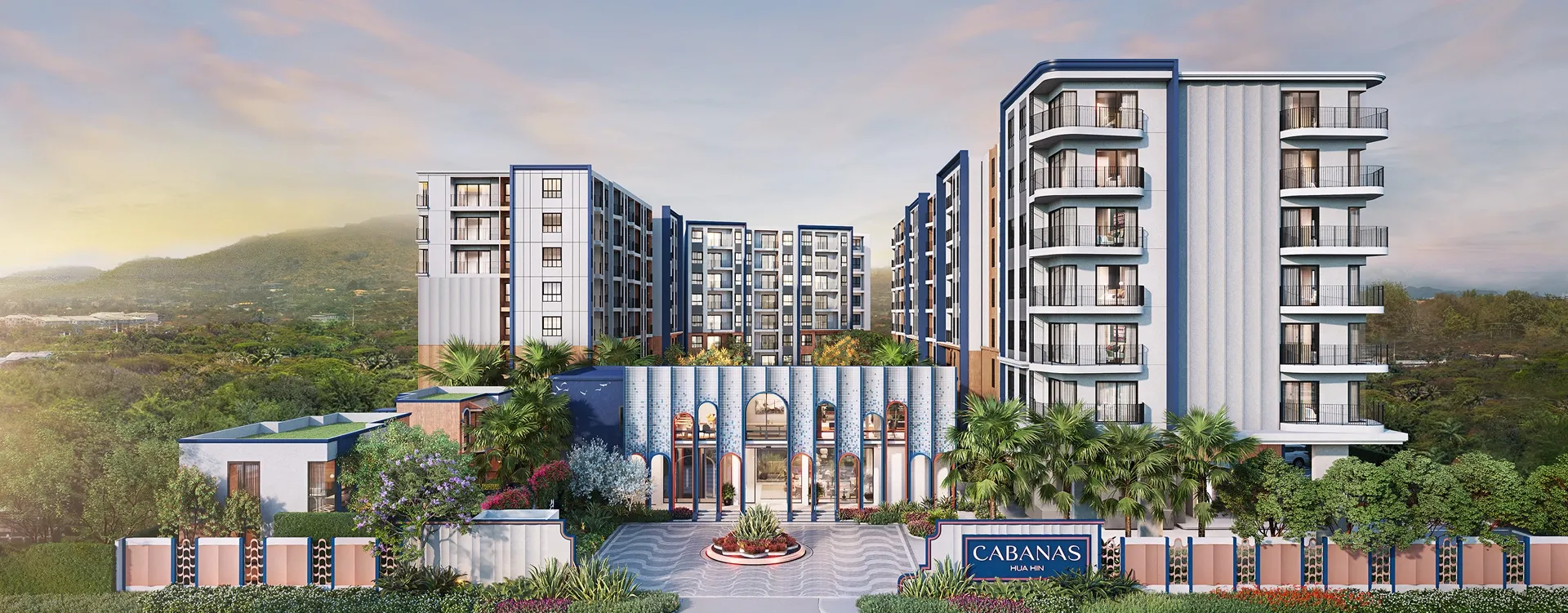
- Think about the next 20 years. Lifts, step-free access, single-storey living, a short drive to hospital and shops within walking distance all matter more at 75 than at 55. Cabanas Hua Hin in Khao Takiab, for example, is a finished building with ground-floor garden villas, 300 m from the beach and about 4 minutes by car from Bangkok Hospital Hua Hin.
- Know what you can own. A condominium can be held freehold within the foreign quota. A house is held on a registered lease of up to 30 years. At La Vista Villas in Chalong, Phuket, for example, a foreign buyer takes a registered lease of the land, with the villa owned separately, so take independent legal advice first. Start with can foreigners buy property in Thailand.
- Keep the visa and the purchase separate. A property does not count toward the O, O-A or O-X money test.
Next steps
Browse property for sale in Hua Hin, Chiang Mai and Phuket, or see every home on the property map and check the drive to the nearest private hospital before you shortlist.
Your age
Time in Thailand each year
Will you work?
Assets or investment available
What matters most
Closest match
Thailand Privilege: membership tiers, prices and what you get
80
Fit out of 100
Why this route
You are 50 or over, plan up to six months a year in Thailand and do not intend to work, so this route is the closest fit: it asks for the least paperwork of the five, and it lets you come and go for long stays without reapplying.
- Stay
- 5 to 20 years depending on tier, with up to one year per entry
- Cost
- THB 650,000 to THB 5,000,000 as a one-off membership fee
The other routes, ranked
Your assets can cover the investment it requires.
You meet its age test of 50 or over, but it means a renewal with proof of funds every year, and 90 day reporting.
From 50 its wealthy pensioner category is open if your pension or other passive income passes the BOI test, but qualifying takes a substantial file of documents, reviewed by the BOI.
Each entry allows a stay of up to 180 days, which matches your time in Thailand, but without remote work you would need a qualifying activity, such as a course or medical treatment.
Buying property does not by itself give a right to stay.
General guidance, not immigration advice. The fit scores are our own reading of each route's published rules against five answers, and they leave out income, nationality and health insurance tests. Rules, fees and thresholds change: check the official source linked from each guide, or ask us.
Send me the ranking
Your five answers and the routes ranked against them, by email. An adviser will talk you through the application and the homes that fit your plans.