Off-plan property in Thailand is priced in baht and paid for over months or years. For a buyer whose money is in pounds, dollars, euros or dirhams, that means two schedules run side by side: the developer's, and the exchange rate's. The first is fixed in the contract. The second is not, and every payment still to be made converts at a rate you cannot know when you sign.
How Thai off-plan payment plans are structured
Each developer sets its own schedule, but most follow one of two shapes.
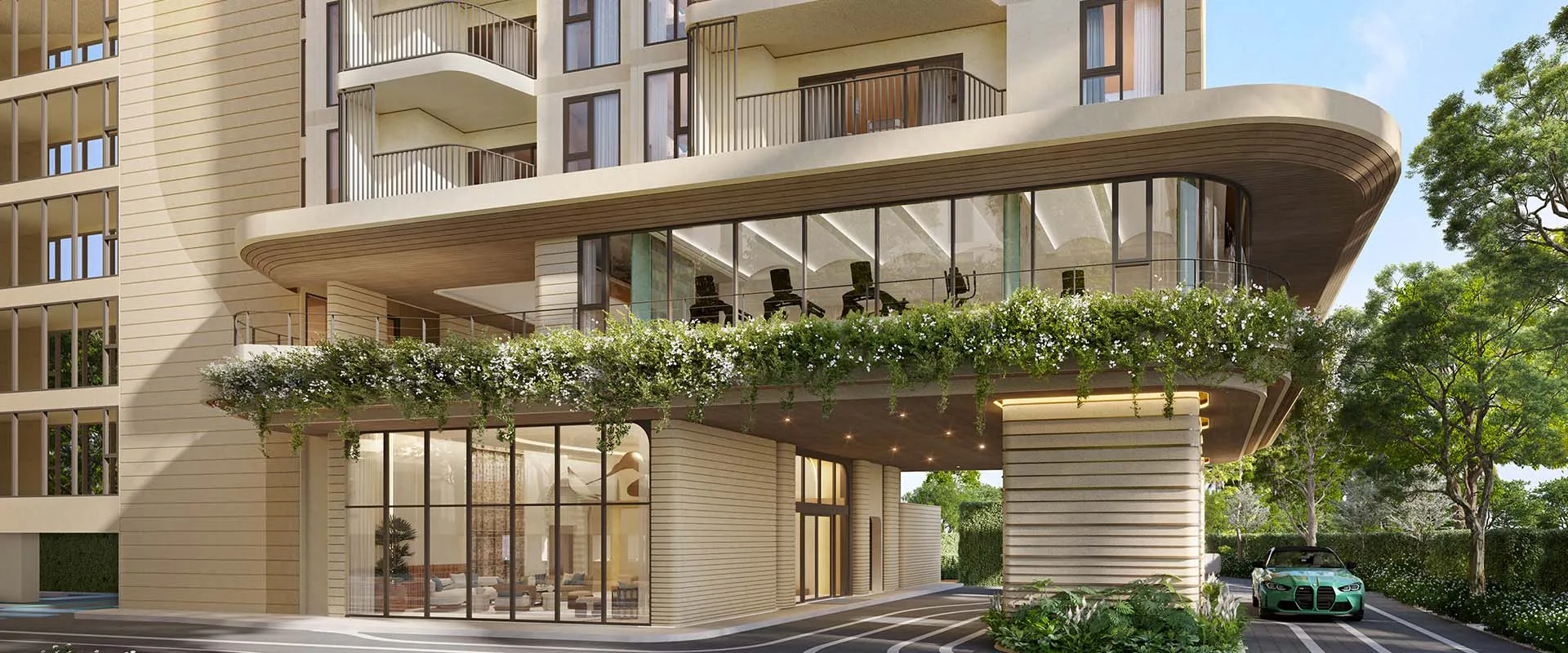
Deposit, then balance on completion. A booking fee reserves the unit, a payment is made on signing the sale and purchase agreement, and the balance is paid on handover and transfer. MGallery Residences MontAzure in Kamala takes a THB 100,000 booking fee, then 75% on signing, 20% on handover and 5% on registration of the transfer.
Instalments during construction. Some plans spread part of the price across the build, tied to dates or to building stages. Layan Verde takes 35% within 14 days of reservation, then 13% every six months, with the last payment on 31 December 2028. PEYLAA Phuket takes 25% on signing, 10% each as the foundations, the structure and the walls and floors are completed, and 45% at handover, targeted for Q4 2027. BRISA Patong takes 30% on signing, 20% during construction and 50% on handover.
Every one of the five off-plan and under-construction developments we offer asks for half the price or more before handover: 50% at BRISA Patong, 55% at PEYLAA Phuket, 75% at MGallery Residences MontAzure and at Sudara Residences Phuket, and 87% at Layan Verde. That commits more of your money while the building goes up, so check the developer's record and what the contract says about delay. It also means most of the price converts payment by payment during the build, not all at once at completion. Read the schedule in the reservation agreement, not the brochure; it is the contract that governs. See the off-plan buying process and payment plan.
What the exchange rate does to your cost
The baht moves against every major currency, and over the life of a build the move can be larger than the buying costs. Four days' reference rates give a sense of scale.
| Date | Baht per US dollar | Baht per pound | Baht per euro |
|---|---|---|---|
| 4 January 2021 | 29.87 | 40.74 | 36.73 |
| 3 October 2022 | 38.08 | 42.70 | 37.18 |
| 16 April 2024 | 36.62 | 45.60 | 38.96 |
| 12 November 2026 | 33.81 | 44.82 | 37.47 |
These are single days, not highs and lows, but the effect is plain. THB 10 million cost USD 334,790 at the rate of 4 January 2021 and USD 262,610 at the rate of 3 October 2022: a difference of USD 72,180 on the same baht price. In sterling, the same THB 10 million cost GBP 245,480 on 4 January 2021 and GBP 219,310 on 16 April 2024.
A move in the rate works in both directions. A weaker baht by completion makes the balance cheaper in your currency; a stronger one makes it dearer. The share of the price still to be paid is the share exposed. On BRISA Patong's plan, half the price depends on the rate at handover; on Layan Verde's, only the last 13%.
The home and its plan
Your currency
Your view of value
Paid before handover
THB 1,950,000
50% of the price, before the keys. The balance of THB 1,950,000 falls due at handover, in month 2.
- On signing the contract: Contract30% of the price
- THB 1,170,000
- During construction: Down payment20% of the price
- THB 780,000
- On handover: Final payment50% of the price
- THB 1,950,000
- Total
- THB 3,900,000
Value at handover, your assumption
THB 3,900,000
At zero change, the price you agreed.
Against the price
THB 0
On paper only, before the costs of buying and selling.
In short
You commit THB 3,900,000 across 3 payments: 50% before handover and 50% at it.
The schedule is the one published for BRISA Patong by Sansiri, completion Q3 2028. The reservation agreement governs; check it before you pay. Converted at the reference rates of 12 November 2026 (European Central Bank reference rates via frankfurter.dev); your bank’s rate and margin will differ. The currency and value figures are your assumptions, not forecasts: we do not predict prices or exchange rates. Send each payment from abroad in foreign currency and keep the bank’s evidence (a Foreign Exchange Transaction Form from USD 50,000, a credit advice below it) to register a freehold condominium and, later, to send sale proceeds home.
Sources for these figures
Talk it through
An adviser can confirm the current schedule and price list, and set the payment dates against your transfers home.
Send me this payment plan
Your schedule by email, payment by payment, with an adviser to check it against the developer's current terms.
Email me the plan
The planner lays out a published schedule or your own by date, converts each payment at the current reference rate, and lets you test a move in the baht of your own choosing. It starts at no change, because we do not forecast exchange rates.
Ways buyers manage the currency
There is no single right approach, and the right one depends on your circumstances. Common choices:
- Convert as you go. Each payment converts at the rate on the day. Simple, and fully exposed to the rate at completion.
- Convert early. Some buyers convert the whole sum, or a large part, when they commit and hold it until each payment falls due. The money must still arrive in Thailand as foreign currency for a freehold condominium, so take advice on where it is held.
- Fix a rate for a future date. Some banks and regulated currency brokers offer contracts that fix a rate for a payment on a known date. They carry their own terms and costs.
The bank's margin on the conversion often costs more than its transfer fee, so compare the rate you are offered with the reference rate on the day. We do not give currency or investment advice: speak to your bank or a regulated adviser.
The paperwork for each instalment
For a freehold condominium, the Land Office needs evidence that the full price came into Thailand as foreign currency.
- Send foreign currency, not baht. The Thai bank converts it on arrival.
- Send from an account in your name, to the developer's account or your own Thai account as your lawyer advises.
- State the purpose as the purchase of the named unit in the named building.
- Collect the evidence. For each transfer of USD 50,000 or more, the receiving bank issues a Foreign Exchange Transaction Form. Below that it gives a credit advice and, on request, a letter listing several remittances, which the Land Office accepts. The total brought in must be no less than the price.
- Keep the originals. When you sell, the bank sending the proceeds abroad asks for the form with the sale contract and the Land Office receipt. See selling property and repatriating funds.
Thailand places no limit on the amount of foreign currency you may bring in. Keep your own records of where the money came from, because a bank may ask. For the transfer itself, see sending money to Thailand.
If completion is late
Completion dates slip, and a later completion means a longer period exposed to the rate. Read what the contract says about delay: the long-stop date, any compensation, and your right to cancel and recover what you have paid. Thailand has no mandatory escrow for off-plan sales, so instalments paid before completion are at the developer's risk and yours. See the off-plan buying process.